Tiwanaku · 400 AD · The Andean Empire Before the Inca
Jupha Sagrada
Long before the Inca built their empire on the spine of the Andes, the civilization of Tiwanaku flourished on the shores of Lake Titicaca at an altitude of nearly four thousand meters — higher than any other major civilization in human history. At this altitude, almost nothing grows. Almost nothing, except quinoa.
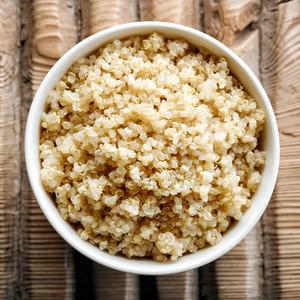
The Aymara people of the Tiwanaku civilization had been cultivating jupha — what the Spanish would later call quinoa — for at least five thousand years before the Inca incorporated it into their own agricultural system. They understood it with a depth that modern nutritional science has only recently confirmed: that it is a complete protein, containing all nine essential amino acids, a quality almost unique among plant foods. The Tiwanaku did not know the biochemistry. They knew that the people who ate it were strong, that it grew where nothing else would, and that it could be stored for years without spoiling.
The Inca called it chisiya mama — the mother grain. The Spanish, threatened by a food source that made their colonized subjects self-sufficient, tried to suppress its cultivation. It survived in the high valleys where Spanish authority could not reach, and arrived in the modern kitchen exactly as it left the Andean terraces: small, round, and quietly extraordinary.