Hainan Island · 1949 AD · The Great Migration
Wénchāng Jī Fàn
When the Communist revolution swept mainland China in 1949, hundreds of thousands of Hainanese — the people of China's southernmost tropical island — fled south to Singapore, Malaysia, and Thailand, carrying with them almost nothing except the recipes they had memorized. Chief among these was the preparation of Wenchang chicken, named for the county in Hainan's northeast that had been refining the technique for at least three centuries.
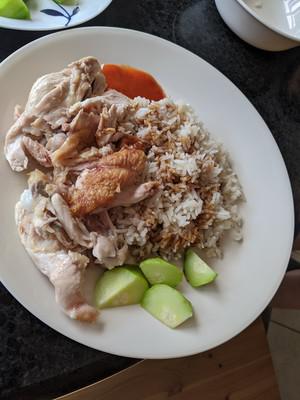
The method was paradoxically simple and demanding: a whole chicken, as fresh as possible, poached in broth at a temperature below boiling — never a full simmer — for exactly the right amount of time so that the meat remained silky and barely cooked at the bone. The chicken fat skimmed from the poaching liquid was used to fry the rice before it absorbed the broth, coating each grain in a rich, golden film that no other rice-cooking method replicates. The aromatics — ginger, garlic, pandan leaf — perfumed both the chicken and the rice simultaneously.
In Singapore, the Hainanese immigrants sold this dish from street carts in the 1950s, and it became the national dish of a country that did not yet exist. Today it is served in restaurants from London to Los Angeles. The recipe has not changed in seventy-five years because nothing about it needs to.