Texas · 1930 AD · The Cattle Drive Kitchen
Arrachera de los Vaqueros
The fajita — which means little belt in Spanish, referring to the skirt steak cut that is its defining ingredient — has one of the most precisely documented culinary origin stories in American food history. It was the food of the Mexican vaqueros who worked the cattle ranches of the Rio Grande Valley in the early twentieth century, who were paid in part with the cuts of beef that the Anglo ranchers considered worthless: the skirt, the flank, the organs. The vaqueros marinated these tough, fibrous cuts in lime juice and dried chile to tenderize them, then grilled them over mesquite fires and sliced them thin across the grain, serving them in flour tortillas — the bread of the northern Mexican frontier.
The dish was essentially unknown outside the Rio Grande Valley until the 1930s, when a ranch cook named Sonny Falcon began selling fajitas from a roadside stand in Pharr, Texas. By the 1970s, it had reached Austin's restaurants. By the 1980s, it had reached every Tex-Mex restaurant in America, typically served on a sizzling cast-iron skillet that arrived at the table still screaming from the heat, trailing a plume of aromatic steam that turned every head in the room.
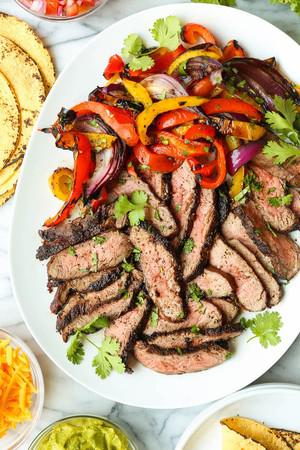
This version strips the fajita back to its vaquero essentials: marinated skirt steak, fierce heat, thin slicing, warm tortillas.