Mexico City · 1519 AD · The First Spanish Encounter with the Avocado
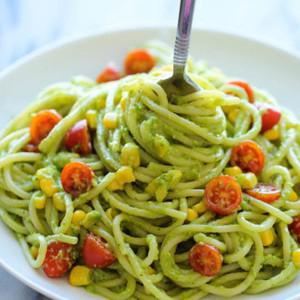
Pasta dell'Avocatl
When Hernán Cortés's expedition reached the Aztec capital of Tenochtitlan in 1519, the Spanish soldiers encountered, among the many fruits and foods unknown to European experience, the āhuacatl — what we call the avocado. The Spanish physician Francisco Hernández, sent to New Spain by Philip II to document its natural history, wrote in his 1577 botanical survey that the avocado possessed a quality he struggled to name in Latin: a fat, smooth richness that coated the mouth like the finest butter but came from a fruit, which was entirely against the natural order of things as he understood it.
The indigenous peoples of central Mexico had been eating avocado for at least five thousand years before Cortés arrived — mashed with chili, lime, and tomato as a sauce for everything from roasted corn to grilled protein. The notion of combining its natural creaminess with pasta is a later synthesis, emerging from the Mexican-Italian immigrant communities of Mexico City in the early twentieth century, where Italian pasta-making traditions and the local avocado harvest collided in apartment kitchens to produce something neither culture had invented alone.
The result requires no heat. The avocado, mashed with garlic, lime, and olive oil, is simply tossed with the hot pasta, which warms it gently while the starch of the noodle absorbs the fat of the fruit. It is one of the fastest pasta sauces in existence, and possibly one of the oldest flavor principles.